Saline River Water Levels Explained for Fishing
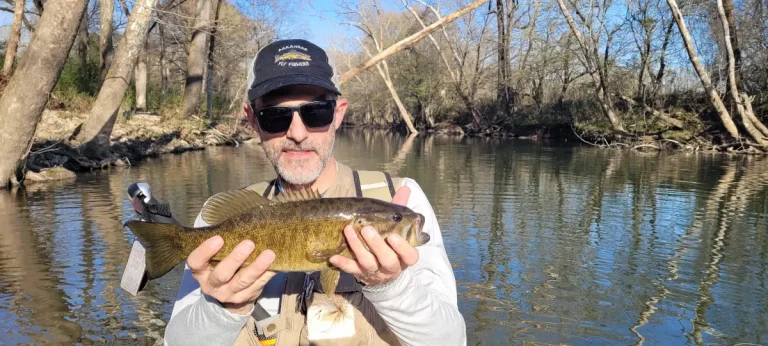
Saline River Water Levels Explained. The Saline River is one of the best places in Arkansas to chase smallmouth bass. It is close to Little Rock. It is easy to access. And it offers a true wild river feel. But the Saline River can change fast. Water levels matter more here than almost anywhere else.
If you want to catch more fish, you need to understand how the river behaves. This guide breaks down Saline River water levels in a simple way so you can fish with confidence.
Why Water Levels Matter for Fishing the Saline River
The Saline River is a free-flowing river. It is not controlled like a dam-fed tailwater. That means rain, runoff, and seasonal patterns all affect water levels.
When the water changes, everything changes:
- Fish location
- Water clarity
- Feeding behavior
- Safety
If you ignore the water levels, you will struggle. If you learn them, you gain a huge advantage. Knowing how these levels affect fish will lead to a better fishing experience and more consistent success on the Saline River.
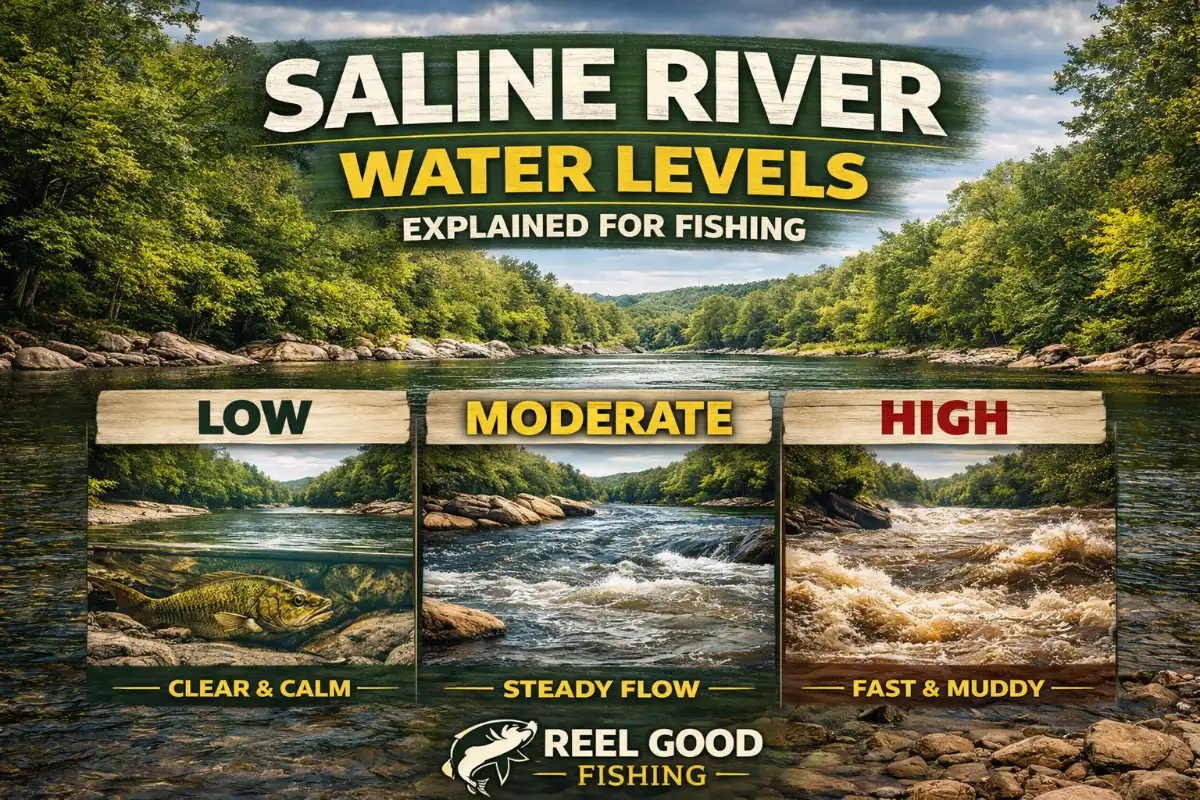
Low Water Levels (Best for Most Anglers)
Low water is when the Saline River shines. This is when the river is stable, clear, and easy to read. Fishing becomes more predictable.
You will see:
- Gravel bars
- Rock structure
- Deep pockets
- Current seams
Fish become easier to find. They sit in predictable spots. You can sight fish in many areas when water levels are low.
How fish behave in low water :
- Smallmouth hold near rocks and shade
- They ambush from cover
- They move less and wait for food
Best tactics for low water levels:
- Topwater early and late
- Small streamers
- Crawfish patterns
- Light presentations
This is the best time for beginners. It is also when the river is safest to wade and enjoy stable levels.
Moderate Water Level (Underrated Fishing Window)
Many anglers overlook moderate water. That is a mistake. This can be one of the best times to fish when the river is slightly elevated.
The river has:
- More flow
- Slight stain
- Active fish
How fish behave in moderate levels:
- Fish spread out more
- They move into current seams
- They feed more aggressively
Best tactics for moderate water levels:
- Streamers
- Larger flies
- Fishing faster water
Moderate Saline River water levels often trigger feeding activity. This is a great time to cover water and find aggressive fish.
High Saline River Water Levels (Proceed with Caution)
High water changes everything. When Saline River levels rise, the river becomes stronger, faster, and often muddy.
You will notice:
- Strong current
- Limited visibility
- Fewer safe wading areas
How fish behave in high Saline River water levels:
- Fish move to the banks
- They seek slow water
- They hold tight to structure
Best tactics for high Saline River water levels:
- Large, dark flies
- Fish close to shore
- Slow your presentation
Safety is key when Saline River water levels are high. If the river is rising quickly, it is better to wait for safer conditions.
Seasonal Saline River Patterns
Saline River water levels change with the seasons. Knowing this helps you plan better trips.
Spring Saline River water levels:
- Higher water
- More rain
- Aggressive fish
Summer Saline River water levels:
- Lower, clearer water
- Best for topwater
- Great wading conditions
Fall Saline River water levels:
- Stable flows
- Consistent fishing
- Active smallmouth
Each season brings different Saline River water levels, and success comes from adjusting your approach.
How to Check Saline River Water Levels Before Fishing
Before any trip, always check Saline River water levels and current conditions.
Look for:
- Water level trends
- Recent rainfall
- Water clarity
If Saline River water levels are rising fast, it may be unsafe. If levels are stable or dropping, fishing usually improves and becomes more predictable. For more information check out our Saline River Fly Fishing Guide.
Final Tips for Fishing Saline River Water Levels
- Focus on structure and current
- Keep your approach simple
- Watch how fish respond
The Saline River rewards anglers who pay attention to changing water levels. It is not about luck. It is about understanding the river. An Arkansas fishing license is required and can be purchased at the Arkansas Game and Fish.
Book a Guided Trip
If you want to skip the guesswork, a guided trip can help you learn faster.
Our trips are built around current Saline River water levels. We adjust tactics, flies, and locations to match real-time conditions so you have the best chance at success.
Book your trip today and experience one of Arkansas’ best smallmouth fisheries.
Written by John Pineda an Arkansas Fly Fishing Guide.
 For upload, use: **File name** `arkansas-fly-fishing-report-little-red-saline-logo.png` **Alt text** `Arkansas fly fishing report for Little Red River and Saline River by Reel Good Fishing`](https://b4282122.smushcdn.com/4282122/wp-content/uploads/2026/03/arkansas-fly-fishing-report-little-red-saline-logo-768x403.webp?lossy=2&strip=1&webp=1 "Arkansas Fly Fishing Report | Little Red River & Saline River 4")